
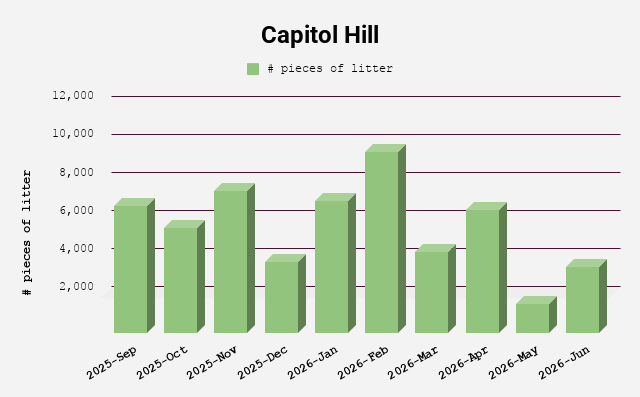

Studying the impact of routine cleanups on littering behavior
Lower levels in May are most likely due to lower cleanups (13), compared to the monthly average (24).
I have been tracking every piece of litter I pick up in the Capitol Hill neighborhood since last September.
Inspired by previous work studying the social psychology of littering, I wanted to see if I could replicate the previous findings.
To synthesize the previous findings: In a littered environment, anti-littering norms are weakened. Conversely, when the environment is clean, anti-littering norms are stronger, i.e., it stays clean-ish.
Quick Neighborhood Stats:
Total cleanups: 240
Total trash: 55,542 pieces
read more about the study
how can you support my work?
(besides not littering)
I have been cleaning up around my neighborhood blocks and collecting data for the last ten months, picking up a monthly average of about 1,900 pieces of trash around one block in particular.
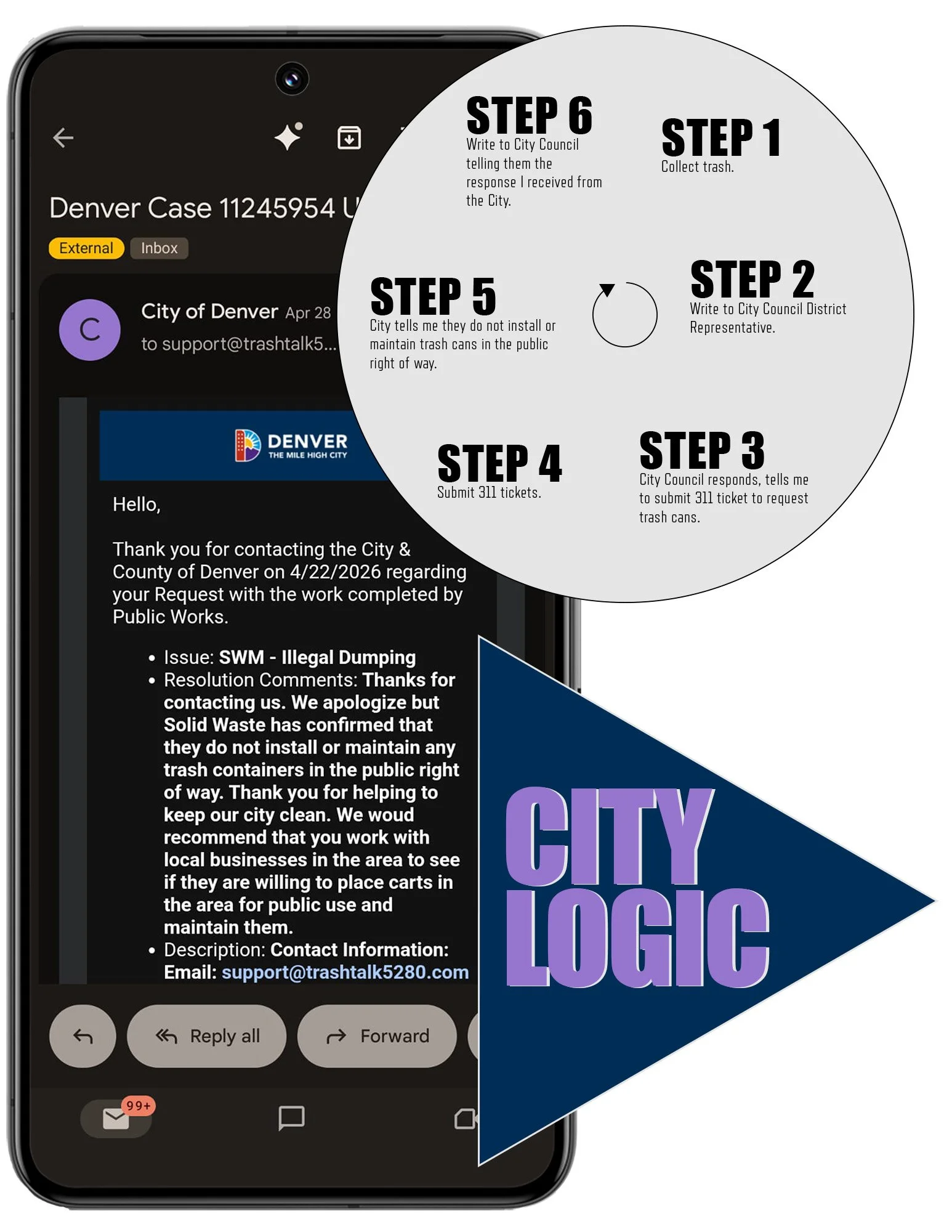
I sent a letter to my neighborhood representative, summarizing my data and requesting the addition of two trash cans on the block.
I received a supportive response from one of my rep’s aides who guided me to submit a 311 service request for the public trash cans.
I submitted a few. I discovered that the City does not install or maintain trash cans in the public right of way.
After eight weeks of weekly cleanups around this block in Capitol Hill, I am shifting to a daily cleanup frequency in an effort to strengthen the anti-littering norm.